
MANST
Forschungsplatz 1
63820 Elsenfeld
In the early hours of September 10, Apple officially unveiled its foldable smartphone, the Apple Duo, an event widely regarded as a pivotal milestone in the premium positioning and large-scale adoption of foldable displays. As ultra-thin glass (UTG) evolves toward thinner profiles and greater fold endurance, edge chipping during laser cutting and breakage during transfer of 30–50 μm glass have become critical bottlenecks in mass production. High-precision slot-die coating, a key step in UTG manufacturing, directly affects the stability of downstream processes and product yield. Drawing on years of technological expertise in high-precision coating, MANST has deployed its equipment on the production lines of leading manufacturers, providing key technical support for linking base substrates to high-end end products.
01 Rapid Foldable Display Penetration: UTG as a Key Trend
As the foldable smartphone market continues to grow, industry competition is shifting from purely form-factor innovation toward deeper areas such as crease control, durability, and display quality.
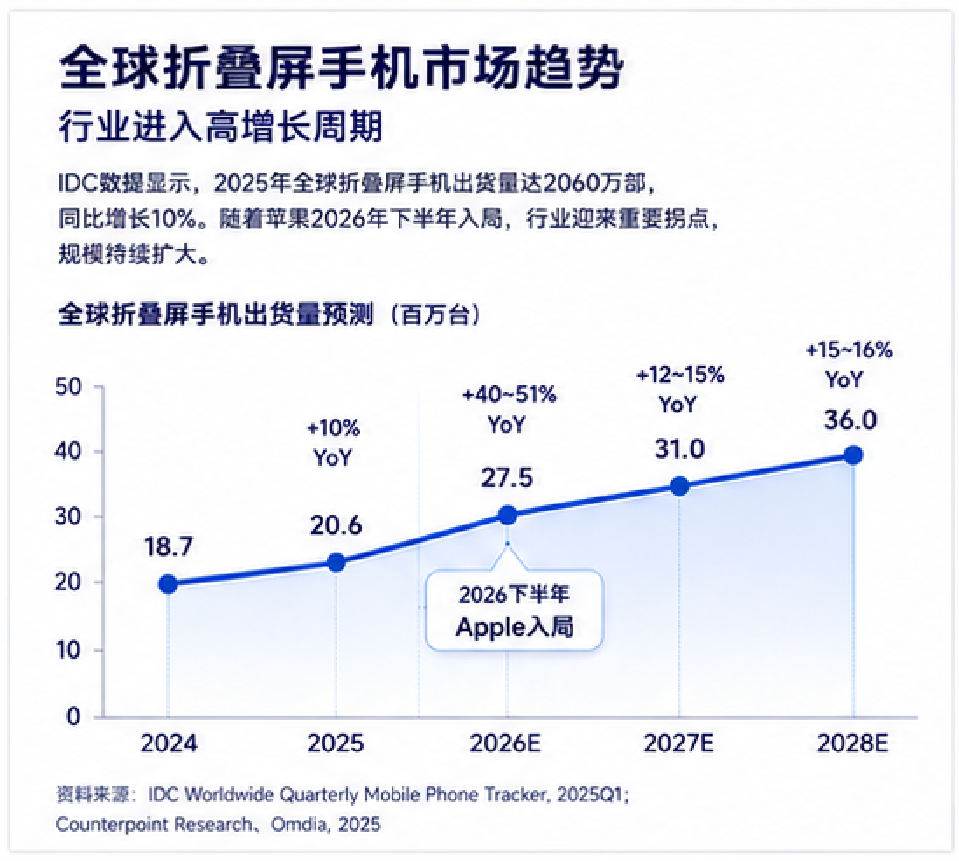
As a key cover material for foldable displays, UTG offers advantages in surface hardness, light transmittance, and glass-like tactile feel, and its application scope continues to expand. However, the crease performance of a foldable display is not determined by any single material or process; it is related to UTG thickness, material properties, surface coatings, display modules, and hinge structure, among other factors.
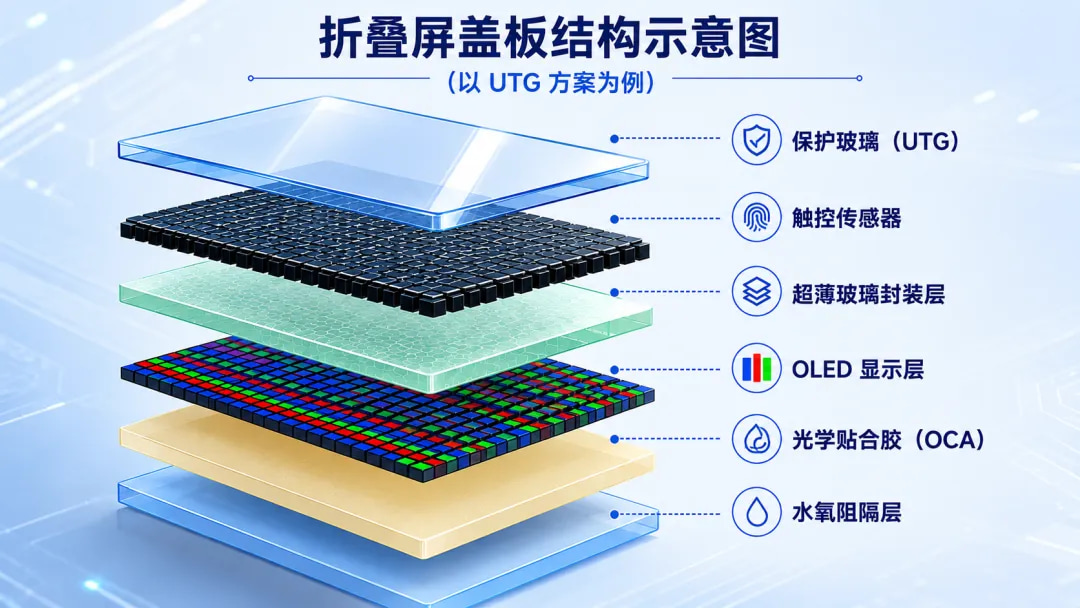
For UTG, stable material properties and surface conditions are essential foundations for ensuring long-term folding performance. As UTG advances toward ever-thinner profiles, its surface coatings impose higher requirements on coating uniformity, defect control, and process stability—making precision coating a critical process step in UTG manufacturing. MANST focuses on the precision slot-die coating stage, continuously advancing equipment and process optimization to provide technical assurance for stable UTG production.
02 From CPI to UTG: Manufacturing Difficulty Rises Significantly
In early foldable display cover solutions, CPI (colorless polyimide) was adopted for its flexibility and relatively low cost. However, its surface hardness, crease performance, and display quality remain limited.
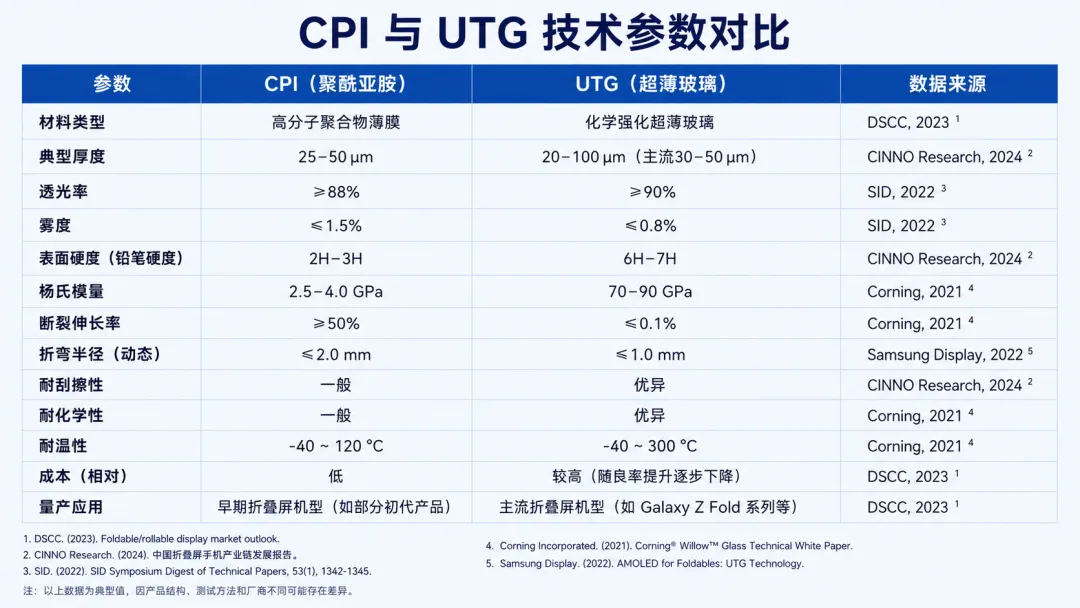
In contrast, UTG, made of glass, offers advantages in surface hardness, light transmittance, and display quality. After ion strengthening, UTG can achieve a surface hardness of 6H–7H, delivering a tactile experience close to that of conventional bar-type smartphone glass.
However, improved material performance also means significantly greater manufacturing difficulty. The micron-scale ultra-thinness of 30–50 μm glass demands much higher processing precision, defect control, and production stability.
The transition from CPI to UTG is not merely an upgrade of cover material; it also drives foldable display manufacturing toward higher-precision and more stable processing technologies.
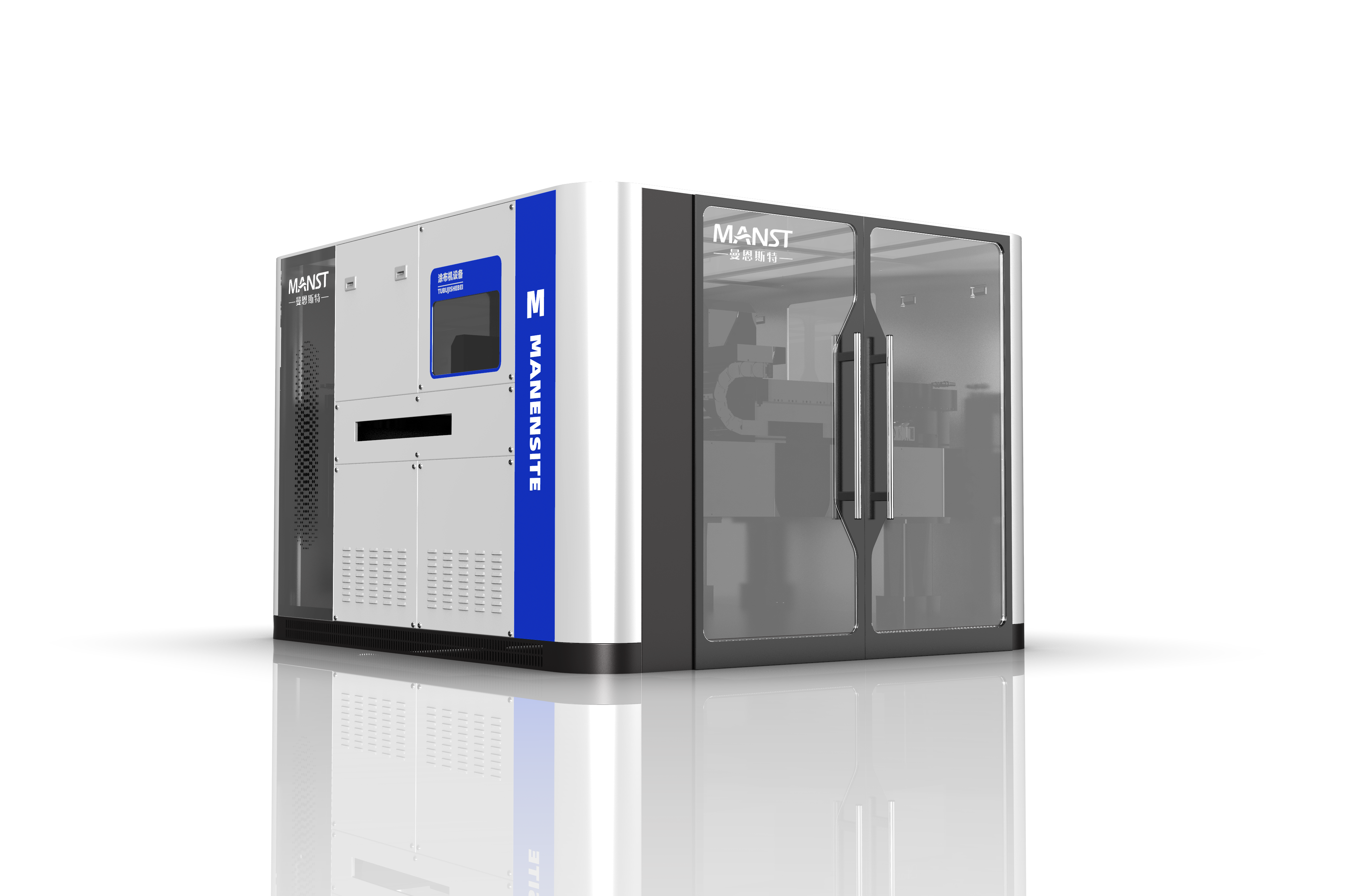
Targeting the core process steps that constrain mass-production yield and operational stability in UTG manufacturing, MANST leverages its years of technical expertise in high-precision coating to conduct customized R&D around high-end UTG production requirements, developing dedicated coating technology solutions tailored to specific application scenarios. Through targeted design of the high-precision coating unit and the ultra-thin glass handling and transfer units, the solution helps customers reduce breakage risk and achieve highly uniform coating, enabling stable, continuous equipment operation to support mass-production delivery.
03 Equipment Technology Breakthrough: MANST Supports UTG Mass Production
The industry-standard UTG mass-production process follows a rigorous sequence: the raw glass sheet is chemically thinned to the target thickness, then ion-strengthened to enhance mechanical strength. After stringent cleaning, it enters the first critical coating step.
Precision coating safeguards UTG yield and lifespan
Given the extreme brittleness of ultra-thin glass, the heat-affected zone and thermal stress generated instantaneously during laser cutting can easily cause fatal defects such as edge chipping and micro-cracks. MANST's flat-panel slot-die coating equipment precisely controls coating thickness deviation within the micron range, ensuring that the protective layer uniformly absorbs and blocks a portion of the laser energy from being transmitted to the glass substrate, thereby reducing the direct thermal shock on the glass edge. While meeting the mass-production requirement of a breakage rate below 5‰, this significantly improves the process yield of UTG laser cutting.
In addition, high-viscosity slurries are difficult to coat. MANST has achieved the uniformity requirements under narrow edge-removal margins through coordinated optimization of formulation, process, and equipment. At the same time, it ensures the mechanical strength and geometric precision of UTG during the subsequent acid washing and edge chamfering/rounding process, preventing etchant penetration caused by pinholes or local weak points in the coating—which would otherwise lead to excessive edge etching and a risk of chipping during subsequent folding tests—thereby providing critical assurance for UTG fold endurance.
Precision equipment underpins stable UTG mass production
With a thickness of only 30–50 μm, ultra-thin glass undergoes significant self-weight deformation. To prevent glass deformation and breakage during transfer, MANST has carried out customized designs for its handling and transfer units, controlling the self-weight deformation of ultra-thin glass substrates to ≤1 mm, thereby reducing breakage risk while ensuring precise transfer.
In terms of overall equipment reliability, MTBF > 500 h and MTTR < 2 h ensure continuous operation and stable production takt, minimizing the impact of unplanned downtime on capacity and yield, improving overall equipment effectiveness (OEE) and capacity utilization, and providing critical equipment support for continuous UTG mass production and delivery reliability.
04 Deepening Expertise in Precision Equipment Technology
Addressing the combined requirements of coating precision, substrate stability, and equipment operational reliability, MANST has carried out dedicated designs around key links such as equipment structure, coating control, and system adaptation, forming equipment capabilities that cover multiple application scenarios:
1). Ultra-high flatness adsorption control — The flatness of the chuck table under vacuum adsorption is controlled within 5 microns, eliminating coating deviation caused by micro-warping of ultra-thin glass and laying a solid foundation for high-precision coating;
2). Comprehensive scratch-free process design — The handling and transfer structures are optimized for double-sided processing characteristics, preventing scratches, indentations, and other defects at the source, and ensuring substrate integrity;
3). Micron-scale slurry dispensing precision — Precise control of coating volume and rate ensures uniform, stable coatings, avoiding problems such as curing deformation and uneven stress, and improving end-product stability;
4). Modular multi-scenario compatibility — Customized production adaptable to substrates of multiple sizes and various types of functional coatings, flexibly matching the process iteration needs of end-product manufacturers.
Notably, MANST's flat-panel slot-die coating equipment has been serving in the supply chain of a global leading consumer electronics manufacturer. Its equipment performance meets the stringent quality requirements of the high-end market, and its process capabilities have gained high recognition from end customers, helping customers produce UTG ultra-thin glass cover products that meet global premium flagship standards, and driving high-quality development of the foldable display industry chain.
MANST's leading edge in slot-die coating machines stems from the company's innovation-driven R&D strategy. Through years of technical accumulation and industrialization validation, the company has established six core technology systems supporting its entire business line:
- Design and manufacturing process technology for coating dies
- Ultra-thin-layer coating technology
- Multi-coating-solution co-coating technology
- High-solids-content slurry coating technology
- Intelligent coating architecture and algorithms
- Industrial on-site big-data collection and management platform
Among these, the ultra-thin-layer coating technology and multi-chemistry co-coating technology meet UTG's requirements for precision processing of coating thickness uniformity, providing critical assurance for the high-precision integration of optical, protective, and anti-fatigue multi-layer coatings.
Relying on its industry coating laboratory and diversified technical expertise, MANST continues to expand the application scope of high-precision coating technology, covering three key tracks and forming a diversified business layout.
As end-market demand for the foldable display industry grows and industry-chain technology matures, UTG manufacturing equipment will further evolve toward higher precision and greater stability.
Equipment companies with capabilities in precision equipment R&D, process adaptation, mass-production validation, and continuous iteration are well positioned to capture greater value amid industry expansion. With deep expertise in precision coating equipment, MANST's business spans multiple high-end manufacturing scenarios including lithium batteries, energy storage, pan-semiconductor, and hydrogen energy, and has accumulated rich experience in equipment R&D, process commissioning, and large-scale mass production—providing a technical and industrialization foundation for entering more advanced manufacturing scenarios.
Going forward, MANST will further leverage its precision equipment and technology platform advantages, continuously improving the adaptability and mass-production stability of its UTG-related equipment, and providing equipment support for the large-scale, high-quality development of the flexible display industry.

+49(0)9372 9283 688
MANST
Forschungsplatz 1
63820 Elsenfeld


MANST
Forschungsplatz 1
63820 Elsenfeld
Copyright © 2024 MANST Technology All rights reserved.