
MANST
Forschungsplatz 1
63820 Elsenfeld
The stable production of solid-state electrolyte membranes has become a critical bottleneck in the front-end manufacturing of solid-state batteries. However, producing high-quality electrolyte membranes is far more than a simple film-forming process.
Fine powders are prone to agglomeration, ultra-thin film formation is highly challenging, stringent atmosphere control is required, solvent recovery is susceptible to frosting and clogging, and electrolyte membrane transfer efficiency remains low. These five challenges are interconnected, creating common obstacles to the large-scale manufacturing of solid-state electrolyte membranes.
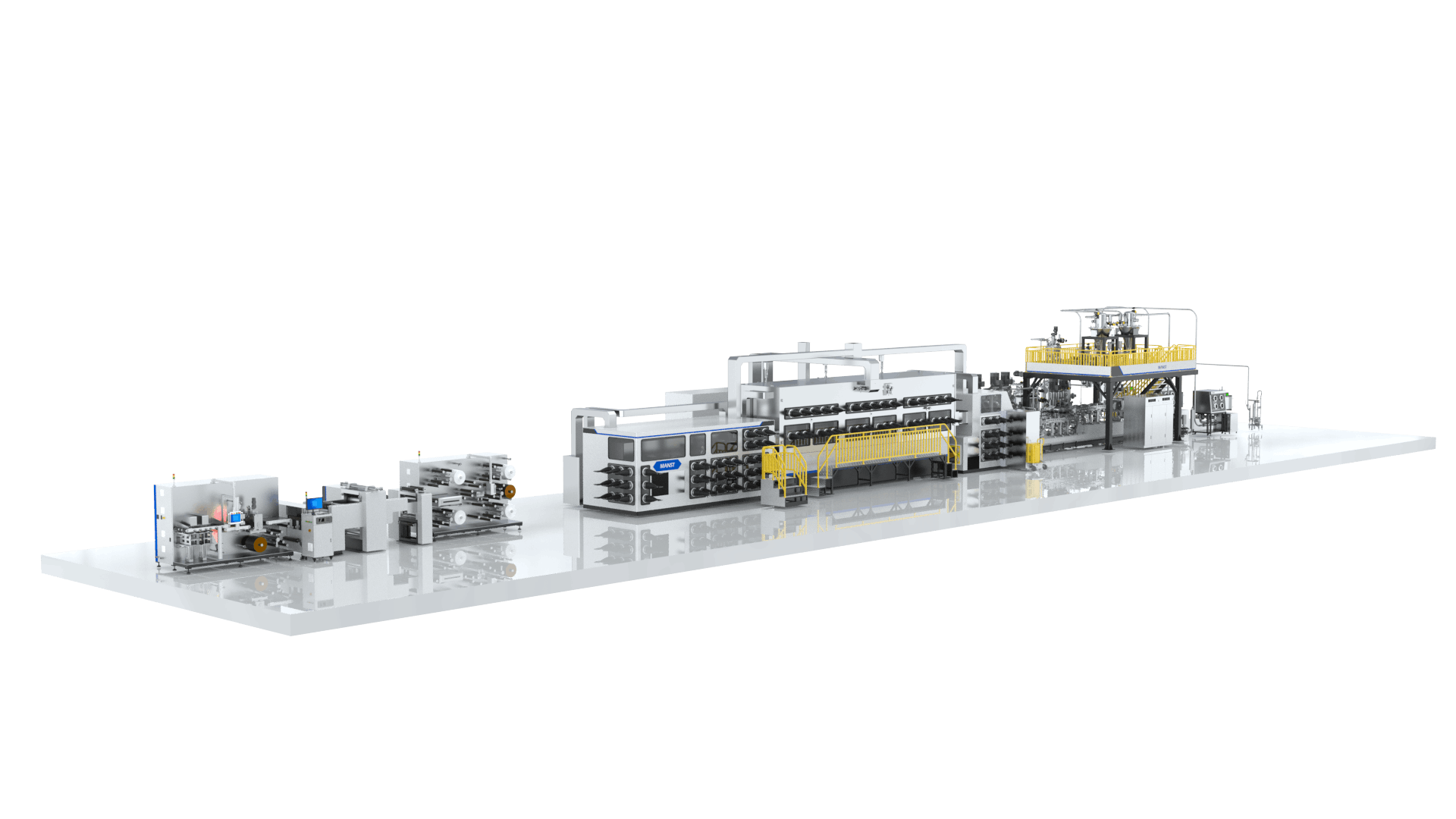
In actual production, these challenges translate into practical pressures such as slow yield improvement and long validation cycles. They not only increase pilot-production and manufacturing costs, but also extend the ramp-up period from pilot scale to mass production.
Therefore, the key to addressing these challenges lies not in improving the performance of a single piece of equipment, but in developing a systematic, end-to-end solution that enables stable integration and coordination across processes.
To address these challenges, MANST leverages more than a decade of experience in coating processes and precision equipment integration. Centered on three core subsystems—continuous twin-screw slurry preparation, coating, drying and solvent recovery, and thermal transfer and lamination—MANST integrates the five common challenges into their corresponding process stages, forming a practical and mass-production-ready system solution.
01 Three Core Subsystems Working in Synergy to Address Key Challenges in Mass Production
Ceramic Twin-Screw Continuous Slurry Preparation: Suppressing Agglomeration and Moisture/Oxygen Attack at the Source
Sulphide electrolyte powders have fine particle sizes and high surface energy, making them highly prone to agglomeration and sedimentation. Conventional mixing processes cannot completely break down agglomerates at the microscopic level. Once these agglomerates enter the coating process, they can lead to defects such as particle spots and uneven film thickness.
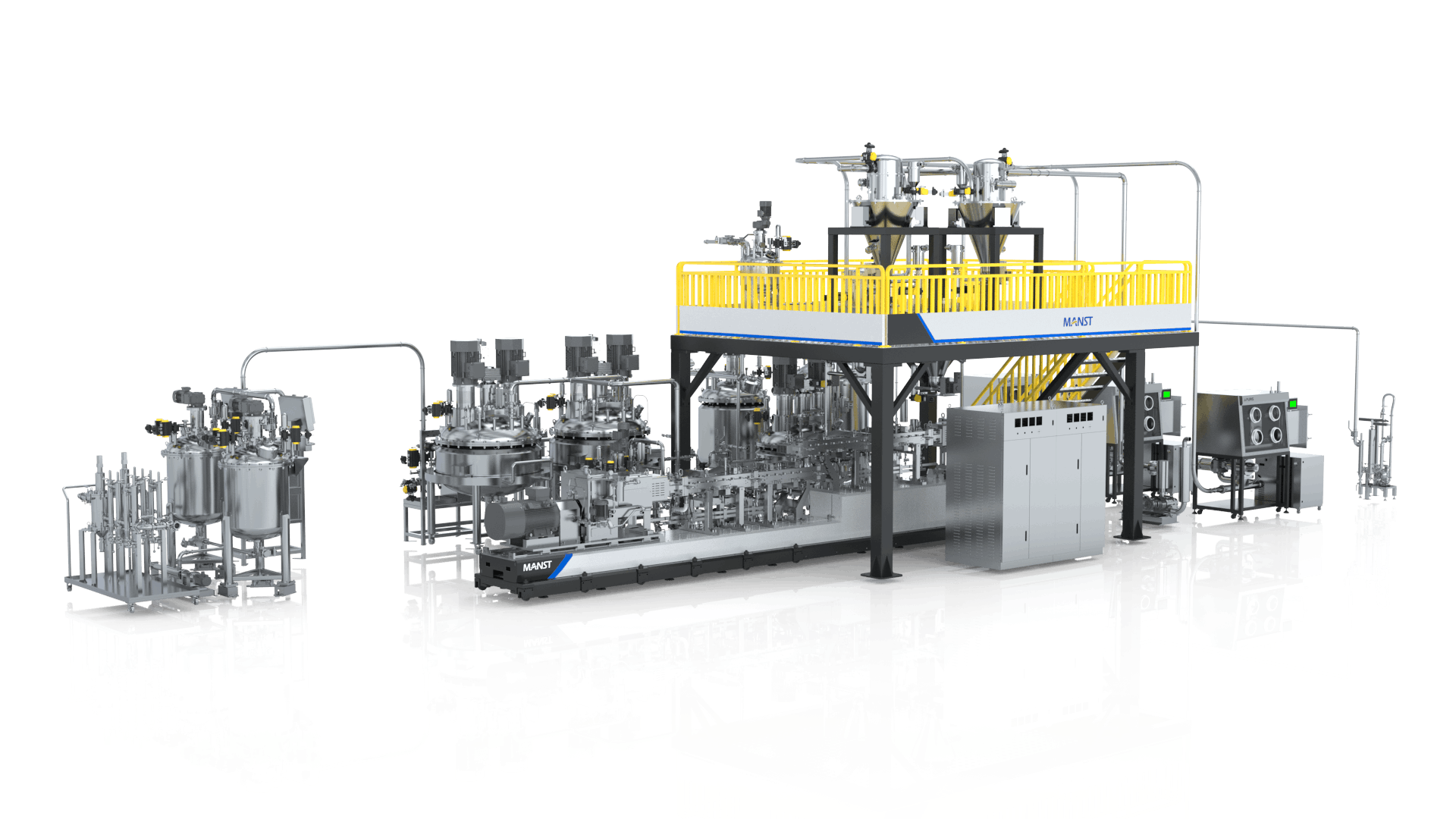
MANST adopts a ceramic twin-screw high-shear kneading process, using intense shear forces at the microscopic level to break down powder agglomerates. At the same time, ceramic screw elements and a ceramic barrel liner form a fully ceramic contact interface, fundamentally reducing the pathways for slurry corrosion and metal contamination. Given the high sensitivity of sulphide materials to moisture and oxygen, the system operates under fully enclosed inert-gas protection throughout the process and integrates automatic metering, continuous slurry preparation, and just-in-time slurry supply, achieving a metering accuracy of ±2‰.
The deep integration of high-shear dispersion and continuous slurry preparation not only ensures high slurry uniformity and stable material supply, but also establishes a critical safeguard at the slurry-preparation stage for precision electrolyte-layer formation and the long-term cycling safety of solid-state batteries.
High-Precision Coating and Solvent Recovery: Coordinating Film-Formation Precision with Safe Solvent Recovery
As electrolyte membranes become increasingly thinner, ultra-thin film formation places higher demands on equipment precision. Under long-cycle or high-rate operating conditions, variations in film thickness can increase the risk of localized overcharging and lithium plating, posing a serious threat to battery safety and cycle life.
To address this challenge, MANST employs a high-precision closed-loop slot-die coating system, combined with CCD, spectral confocal dimensional inspection, or areal-density measurement, to enable closed-loop control of coating areal density. The double-sided areal-density deviation can be controlled within ≤±1.0%, with film thickness ranging from 10–80 μm, ensuring the thickness consistency and uniformity of ultra-thin electrolyte layers.

To improve the stability of brittle electrolyte membranes during processing, MANST introduces a supporting-film pre-lamination process, forming a sandwich-like composite structure of “electrolyte layer–supporting film–electrolyte layer.”
The supporting film significantly enhances the tensile strength and flexibility of the composite membrane. It also provides an additional physical barrier against lithium dendrite penetration, improving the processing stability and interfacial safety of the electrolyte membrane and providing effective structural support for the long-cycle reliability of solid-state batteries.
For wet-process manufacturing, solvent handling and the production environment are equally critical to stable line operation. For moisture- and oxygen-sensitive materials, MANST deeply integrates coating equipment with atmosphere-control systems such as gloveboxes and containerized dry rooms. Using a modular, “building-block” architecture, the system reduces the volume required for environmental control while increasing the level of automation, enabling fully enclosed inert-gas protection throughout coating with moisture and oxygen levels maintained at ≤10 ppm.
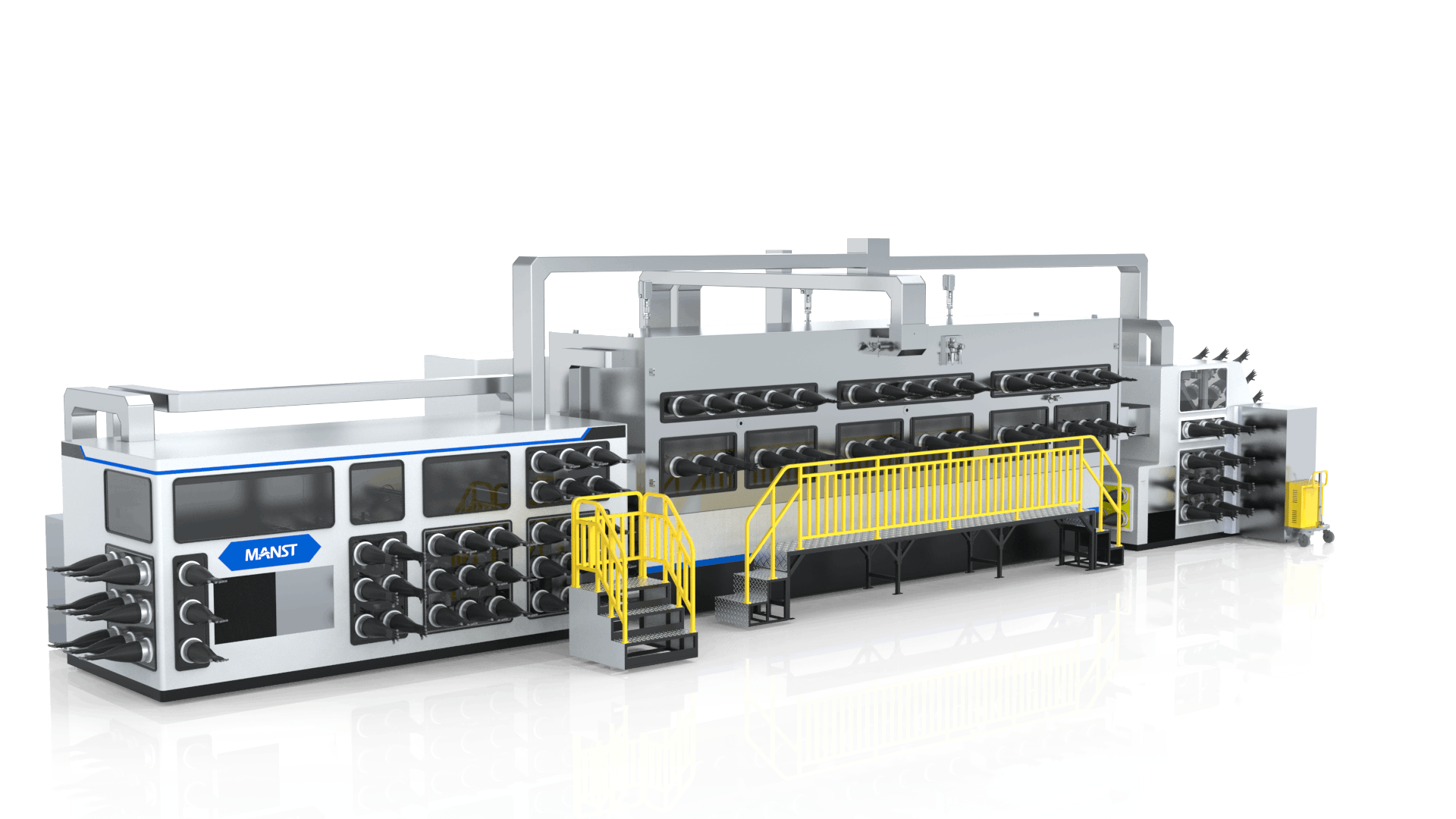
At the same time, the solvent recovery process incorporates a deep-cooling fluorinated defrosting process. Through multi-stage condensation combined with a high-sealing, explosion-proof design, the system enables defrosting and liquid discharge without stopping the line, addressing frosting and clogging issues. This supports continuous production while significantly reducing solvent loss and exhaust emissions, thereby lowering production and manufacturing costs.
Thermal Transfer and Lamination: Process Integration for Higher Transfer Yield
Thermal transfer and lamination is a critical process for integrating electrolyte membranes into electrode manufacturing. Compared with film formation alone, the transfer process must simultaneously address challenges such as membrane delamination, positional accuracy, lamination quality, and cutting precision.
MANST has developed an electrolyte transfer–compaction–cutting integrated machine, integrating unwinding and web alignment, preheating, thermal transfer and lamination, online compaction, laser thickness measurement, precision cutting, and CCD visual inspection. By integrating multiple processes into a single system, the equipment minimizes precision losses associated with transferring materials between separate machines.
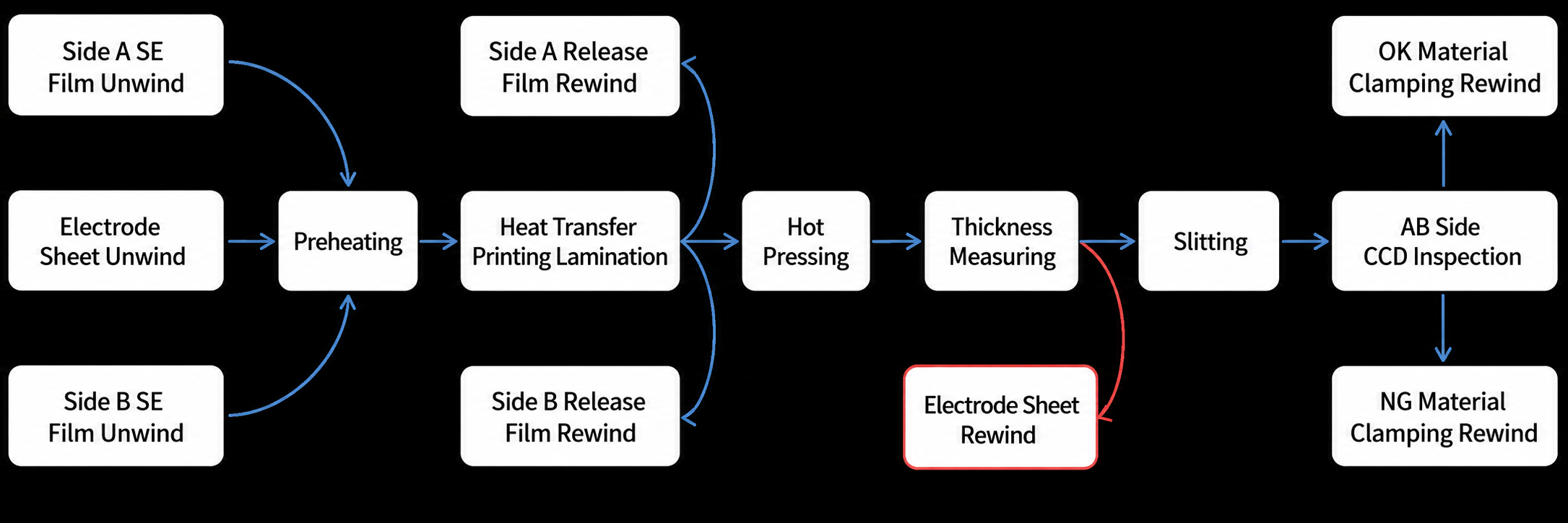
To address the poor natural wetting at solid–solid interfaces, the equipment adopts a servo-controlled constant-gap/constant-pressure dual-mode roll pressing system. The constant-gap mode ensures uniform and consistent membrane thickness, while the constant-pressure mode accommodates the deformation characteristics of different electrolyte systems and can be selected according to process requirements. Combined with polar adhesive technology and thermally responsive interface technology, the system improves electrolyte membrane transfer efficiency and interfacial bonding. With a material transfer rate of ≥95%, it enables dense interfaces and stable, low-resistance contact.
Full-process online laser thickness measurement and CCD alignment provide closed-loop process control. Process parameters are traceable, and the system supports MES integration. Compared with conventional solutions using separate process equipment, overall efficiency can be increased by more than 50%, reaching an industry-leading level.
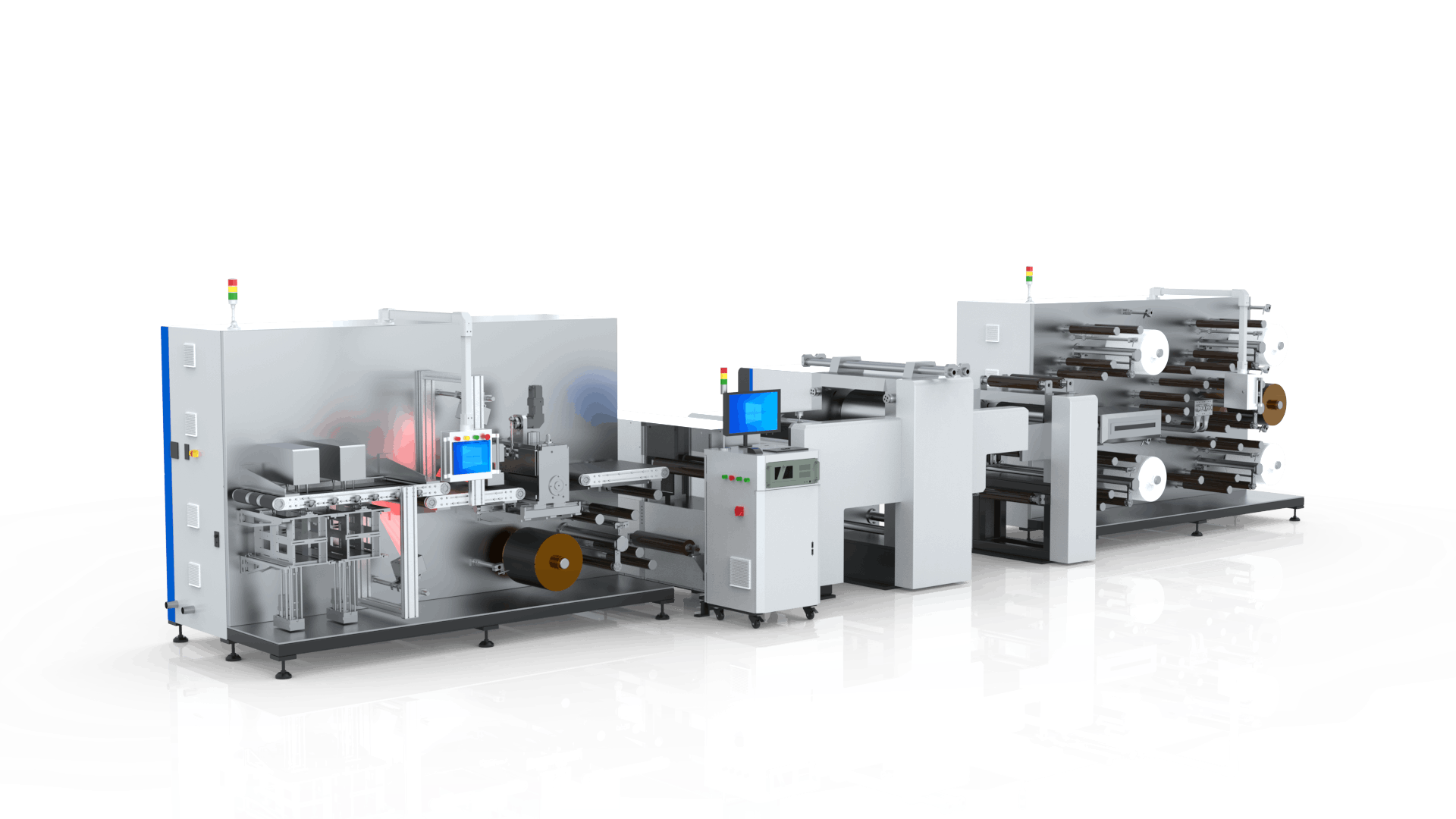
The equipment is compatible with sulphide, oxide, polymer, and other electrolyte systems, as well as various cathode and anode materials. It meets the validation and mass-production requirements of different process routes, providing a core equipment foundation for efficient, precise, and flexible solid-state battery electrode manufacturing.
02 From Standalone Equipment to Integrated Line Coordination: Driving Mass-Production Implementation Through Engineering Practice
At present, MANST’s solid-state electrolyte membrane system solution has entered in-depth technical discussions with multiple customers, with some projects already progressing to the delivery stage.
At this critical stage, when solid-state battery technology routes have yet to fully converge, the certainty of equipment solutions directly affects customers’ validation efficiency. Through engineering practice, MANST is accelerating process validation and industrial-scale implementation.
Looking ahead, MANST will continue to advance technology in thinner membranes, higher consistency, process integration, and online inspection, while also developing emerging processes such as dry film formation. By deepening equipment–process integration capabilities, MANST will work together with material suppliers and battery manufacturers to leverage advanced equipment manufacturing capabilities and accelerate the transition of solid-state batteries from the laboratory to mass-production lines.

+49(0)9372 9283 688
MANST
Forschungsplatz 1
63820 Elsenfeld


MANST
Forschungsplatz 1
63820 Elsenfeld
Copyright © 2024 MANST Technology All rights reserved.